 Global (English)
 HU
HU
 AE
AE
 BE-fr
BE-fr
 BE
BE
 BG
BG
 CH-de
CH-de
 CH-fr
CH-fr
 CL
CL
 CY
CY
 CZ
CZ
 DE
DE
 EE
EE
 ES
ES
 FR
FR
 HR
HR
 IL
IL
 IS
IS
 IT
IT
 ME
ME
 MT
MT
 NL
NL
 PL
PL
 RO
RO
 RS
RS
 RU
RU
 SE
SE
 SI
SI
 SK
SK
 UA
UA
 UK
UK
 IN
IN
 TW
TW
 LT
LT


A wine fridge is purpose-built to preserve wine: stable temperature, balanced humidity, low vibration and UV-protected glass. A regular kitchen refrigerator is built for food safety instead — colder, drier and far more prone to temperature swings than wine can tolerate long-term.
| 01 | Is a Wine Fridge Really Better Than a Regular Refrigerator? |
Yes. A wine fridge maintains the temperature, humidity, vibration control and UV protection that wine needs, while a regular refrigerator is built around food safety rules that work against long-term wine storage.
Regular refrigerators run too cold, too dry and cycle temperature constantly as the compressor switches on and off and the door opens and closes. None of that is a problem for groceries, but all of it works against a bottle of wine sitting in storage for months or years.
| 02 | What Is a Wine Fridge? |
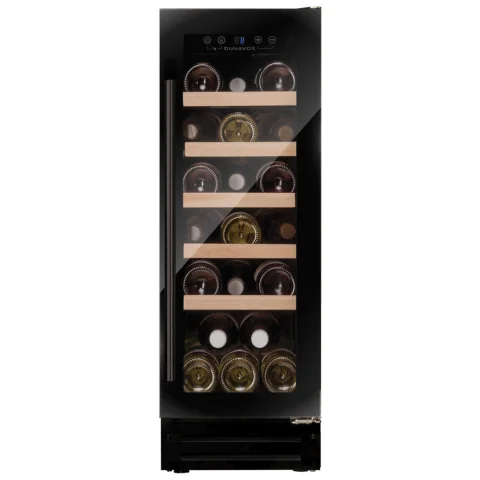
A wine fridge is a refrigeration appliance built exclusively for storing wine bottles, with stable temperature control, humidity management, low vibration and UV-protected glass.
Wine fridges are typically adjustable somewhere in a 5–20°C range and are available in single-zone (one steady temperature) or dual-zone (two independent zones for reds and whites) configurations, so the exact setting can be matched to what's actually inside the cabinet.
| 03 | What Is a Regular Refrigerator Designed For? |
A standard kitchen refrigerator is designed to keep food safely between roughly 1–4°C, prioritising food safety over the stable, moderate conditions wine needs.
Kitchen fridges are built around frequent door openings, fast recovery after each opening, and moisture removal to stop food spoiling. That combination of cold temperature, low humidity and constant cycling is exactly what wine doesn't want over the long term.
| 04 | Main Differences at a Glance |
This isn't a close call — a kitchen fridge simply isn't built with wine in mind. Here's exactly where the two diverge.
| 05 | Can You Store Wine in a Regular Refrigerator? |
Yes, but only for the short term. A regular fridge works fine for chilling a bottle before serving, keeping an opened bottle for a few days, or brief temporary storage.
Long-term storage in a standard refrigerator isn't recommended: the dry air gradually dries out corks, and the constant temperature cycling can dull flavour and aroma over months of storage.
| 06 | Single Zone vs Dual Zone Wine Fridges |
Once you've decided a wine fridge makes sense, the next question is usually how many temperature zones you need.
Single zone • One consistent temperature • Best for a dedicated collection • Ideal for reds or whites separately | Dual zone • Two independent cooling zones • Store reds & whites together • More serving flexibility |
Both configurations outperform a regular refrigerator for wine preservation. For a deeper comparison, see our Single Zone Wine Fridges and Dual Zone Wine Cabinets guides.
| 07 | Does a Wine Fridge Use More Electricity? |
Not necessarily. A wine fridge is designed for continuous, stable operation rather than the aggressive cooling cycles a kitchen fridge runs every time the door opens.
| Compact wine coolers are often energy efficient by design |
| Single-zone models generally use less energy than dual-zone models |
| Modern inverter compressor technology reduces power draw significantly |
| 08 | Frequently Asked Questions |
| 09 | Conclusion |
A regular refrigerator and a wine fridge might look similar from the outside, but they solve completely different problems. A kitchen fridge is optimised to keep food safe: cold, dry, and cycling constantly. A wine fridge is optimised to keep wine at its best: stable, moderately humid, low-vibration and shielded from UV light. For a bottle you'll drink this week, the kitchen fridge is perfectly fine. For a collection you actually care about, a dedicated wine fridge is the appliance built for the job.
| 10 | Related guides & resources |
Further reading for choosing and setting up the right wine storage solution.
Wine Fridge vs Regular Refrigerator · DUNAVOX Ready to give your wine the storage it deserves? Browse the full DUNAVOX range, or contact the team for professional specification support. | Browse collections → Contact us |