 Global (English)
 HU
HU
 AE
AE
 BE-fr
BE-fr
 BE
BE
 BG
BG
 CH-de
CH-de
 CH-fr
CH-fr
 CL
CL
 CY
CY
 CZ
CZ
 DE
DE
 EE
EE
 ES
ES
 FR
FR
 HR
HR
 IL
IL
 IS
IS
 IT
IT
 ME
ME
 MT
MT
 NL
NL
 PL
PL
 RO
RO
 RS
RS
 RU
RU
 SE
SE
 SI
SI
 SK
SK
 UA
UA
 UK
UK
 IN
IN
 TW
TW
 LT
LT


An undercounter wine fridge is built into kitchen cabinetry with front ventilation, while a freestanding wine fridge stands independently and needs open space around it for rear ventilation. Both preserve wine equally well — the right choice comes down to where the appliance will live and how much flexibility you need.
| 01 | Undercounter vs Freestanding: Quick Answer |
An undercounter wine fridge is engineered to be enclosed in cabinetry, venting through the front. A freestanding wine fridge vents through the rear and sides, so it must stand in open space. Choosing between them is one of the first decisions to make when buying a wine cooler, since it depends entirely on where the appliance will live and whether it needs to move again later.
DUNAVOX makes dedicated ranges for each: Flow for undercounter installation, and Home for freestanding placement — plus Grande for large-capacity collections that can go either way.
| 02 | What Is an Undercounter Wine Fridge? |
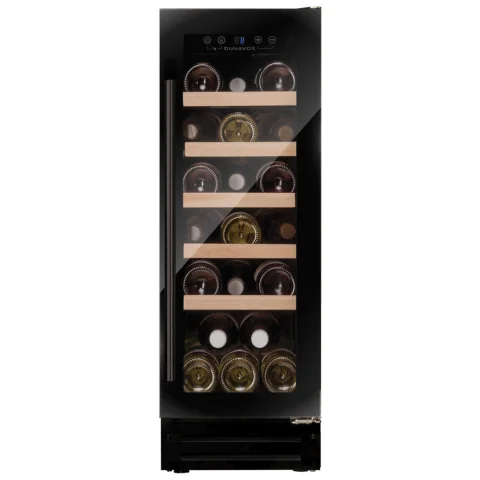
An undercounter wine fridge is a built-in appliance designed to fit under a countertop or inside cabinetry, using front ventilation so heat escapes through the front rather than the back.
This front-ventilation design is precisely what allows an undercounter unit to sit tightly enclosed on three sides without overheating. They're especially popular in kitchen islands, home bars, luxury apartments and entertainment spaces.
| 03 | What Is a Freestanding Wine Fridge? |
A freestanding wine fridge stands on its own and vents through the rear and sides, so it needs open airflow space around it rather than enclosed cabinetry.
Because they don't rely on cabinetry for ventilation, freestanding wine coolers can be placed almost anywhere — dining rooms, living rooms, wine cellars, offices, hospitality spaces or open-plan interiors — and relocated later without any structural changes.
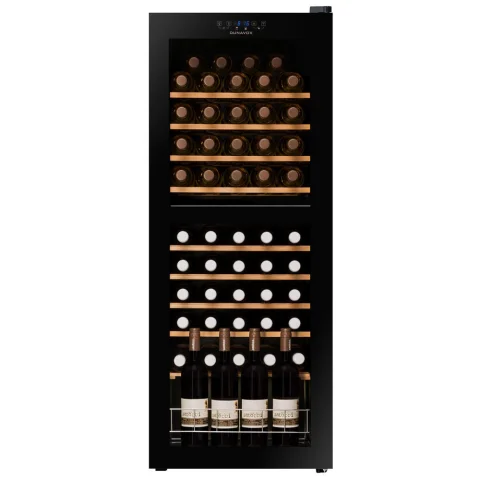
| Dunavox tip: never install a freestanding model under a counter. Because its ventilation sits at the rear, enclosing it on three sides blocks airflow and causes the compressor to work harder than it should. If you want an under-counter look, choose from the Flow range instead. |
| 04 | Main Differences at a Glance |
The biggest technical difference between the two is airflow management. Here's how the rest compares.
| 05 | What Do They Have in Common? |
Despite the very different installation styles, both undercounter and freestanding wine fridges share the same core wine preservation technology.
| 06 | Which One Should You Choose? |
The best option depends on your space and how permanent you want the appliance to be.
Choose undercounter if… • You're renovating or fitting a kitchen • You want a seamless, built-in look • Floor space is limited | Choose freestanding if… • You want installation flexibility • You might move the appliance later • You have dedicated wine storage space |
| 07 | Frequently Asked Questions |
| 08 | Conclusion |
Undercounter and freestanding wine fridges both preserve wine to the same professional standard — the decision really comes down to ventilation and placement. DUNAVOX Flow is built for enclosed, front-vented cabinetry installation and a permanent, seamless kitchen look. DUNAVOX Home is built to stand on its own, vent from the rear, and move wherever it's needed. For larger collections that want the flexibility of either, DUNAVOX Grande spans both worlds with models suited to freestanding or built-in placement. Whichever you choose, the one rule that matters most is respecting the appliance's ventilation design — that's what protects both the cooling performance and the warranty.
| 09 | Related guides & resources |
Further reading for anyone planning a wine storage purchase or installation.
Undercounter vs Freestanding · DUNAVOX Flow & Home Not sure which installation style fits your space? Browse the DUNAVOX Flow and Home collections, or contact the team for professional specification support. | Browse collections → Contact us |